
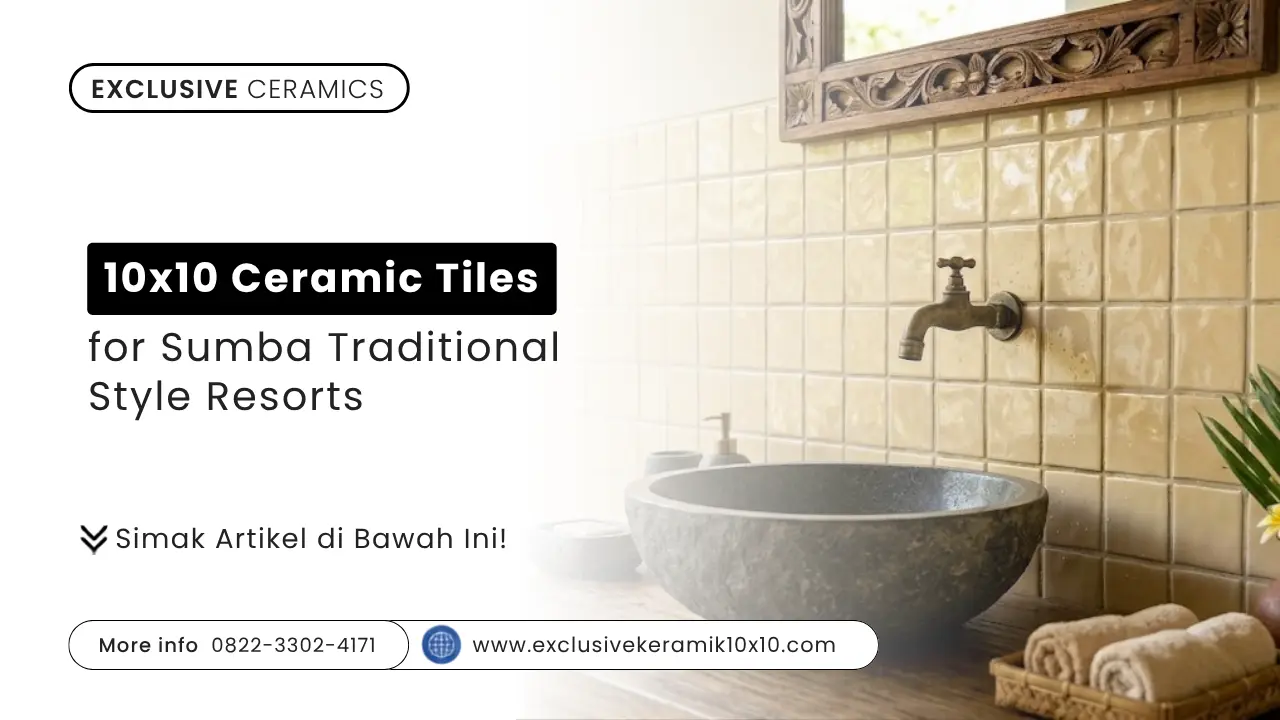
Sumba’s towering thatched houses look unlike anything else in Indonesia. That’s why resort owners now explore 10×10 ceramic tiles Sumba traditional style designs for a practical, authentic look. Of course, traditional Sumba homes use wood, bamboo, and thatch instead of ceramic. However, designers can borrow the island’s colors, textures, and patterns for modern tile. Moreover, the small 10×10 format echoes the repeating rhythm of Sumba’s woven cloth. In this guide, we first explain what defines Sumba style. Then, we match four tiles to those traits. So, let’s begin.
What Defines Sumba Traditional Style
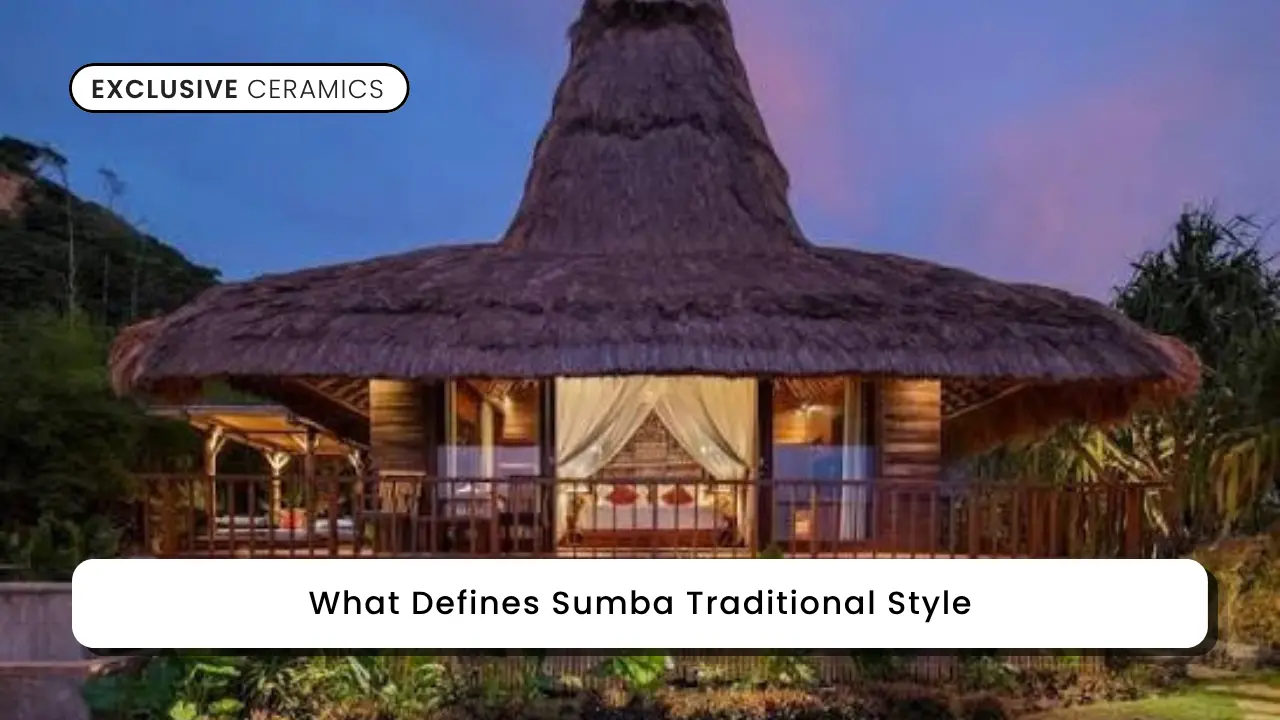
Understanding the style first helps you choose tiles with purpose. Basically, 10×10 ceramic tiles Sumba traditional style projects turn real cultural traits into color, texture, and pattern. Below are six traits, and each one comes with a tile idea.
1. Towering Thatched Roofs
First, the uma mbatangu, or “peaked house,” stands out for its tall central roof of dried alang-alang grass. This roof gives a village a warm, golden-straw color. Therefore, warm cream and soft terracotta tiles echo that glow well. These shades also keep a resort lobby feeling sunny and welcoming.
2. Natural Building Materials
Traditional builders use wood, bamboo, and thatch, and they often tie large parts with rattan instead of nails. As a result, the whole look feels earthy, matte, and quiet. Consequently, matte satin tiles suit this style better than glossy ones. Shiny surfaces would clash with the natural mood.
3. Cool, Shaded Interiors
Next, Sumba houses sit on stilts, and gaps in the floor let air move through. Inside, rooms feel cool and shaded from the strong sun. Therefore, light, calm tiles help resort rooms feel airy in the same way. Light tones also reflect soft light inside shaded spaces.
4. Ikat Colors from Natural Dyes
Sumba’s famous ikat cloth traditionally uses indigo blue and rust red from morinda roots. Meanwhile, off-white fields balance these darker tones. Together, they form a palette of rust, dark, and cream. Designers can echo this palette with terracotta, grey, and white tiles.
5. Repeating Bands and Motifs
Ikat weavers arrange horses, birds, and skull trees in repeating horizontal bands. Likewise, a 10×10 tile grid repeats one small unit again and again. Therefore, you can lay tiles in bands of two or three colors to echo woven cloth. This idea makes 10×10 ceramic tiles Sumba traditional style layouts feel meaningful, not just decorative.
6. Stone and Ancestral Heritage
Finally, Sumba villages often keep stone graves near the houses, so stone carries strong ancestral meaning. Thus, natural stone motifs and gentle waves recall hand-cut stone. A wavy surface adds that carved, tactile feel to a feature wall.
10×10 Ceramic Tiles for Sumba Traditional Style Resort
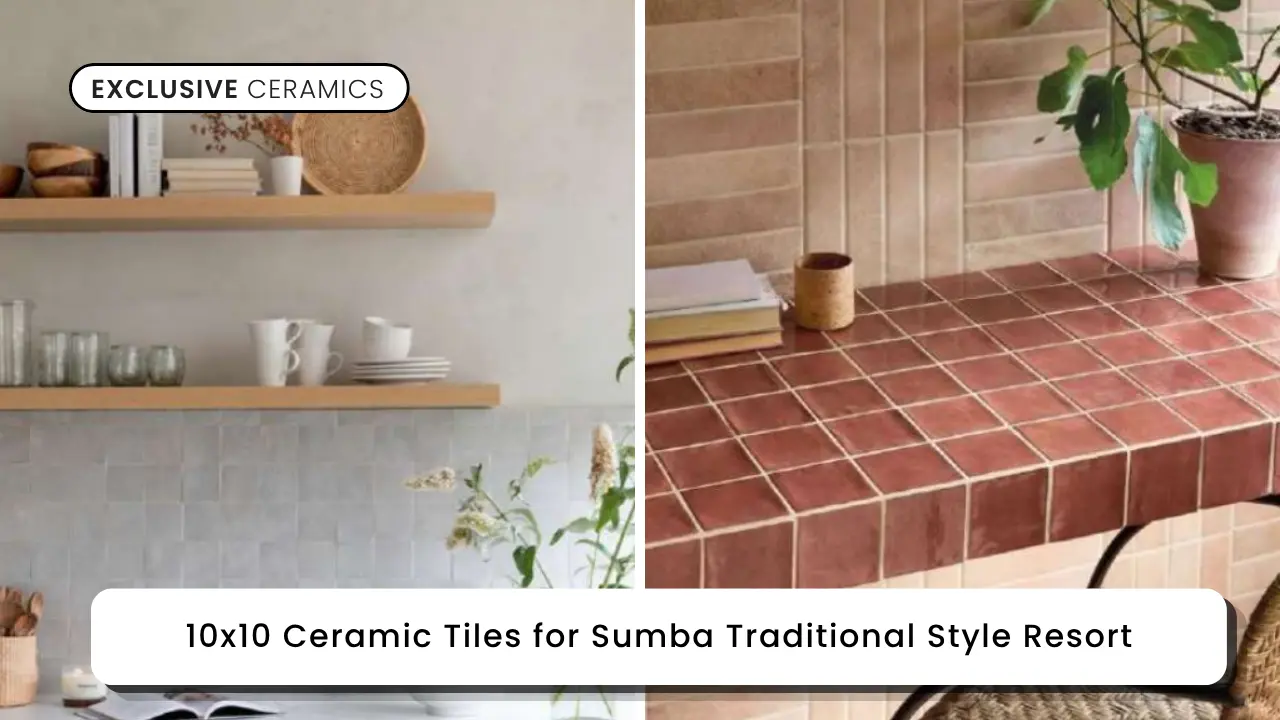
Now that the traits are clear, here are four tiles that bring them to life. Each pick below links back to a trait above. Together, these 10×10 ceramic tiles Sumba traditional style options form a balanced, resort-ready palette.
1. SB-4017
SB-4017 combines a cream terracotta motif with a flat matte satin surface. This tone gives a warm, golden impression that mirrors the thatched roof color from the first trait. Because the finish stays matte, it also honors the natural-material mood discussed earlier.
Furthermore, the soft terracotta nods to the rust-and-ivory palette of ikat cloth. Use it on restaurant walls, villa kitchens, and bathroom walls where warmth matters most. As a result, SB-4017 gives 10×10 ceramic tiles Sumba traditional style projects a warm, welcoming base. See the full details here: SB-4017 10×10.
2. Sasi Beige
Sasi Beige pairs a wavy surface with a natural stone white motif. This texture creates a calm, hand-cut stone impression that connects to the stone heritage of Sumba villages. Since the color stays light, it also supports the cool, shaded interior feel from the third trait.
Additionally, the waves add gentle shadow play under soft lighting. Therefore, Sasi Beige suits feature walls behind beds, reception desks, or spa corners. Discover more here: Sasi Beige 10×10.
3. Granito Bianco
Granito Bianco features a fresh white salt and pepper motif on a flat matte satin surface. This clean impression keeps resort bathrooms bright, much like the off-white fields of ikat cloth. Moreover, the fine speckles add quiet texture that suits the earthy, matte mood described earlier.
Because white reflects light, it supports the airy interior trait too. Consequently, Granito Bianco makes a dependable neutral partner for any 10×10 ceramic tiles Sumba traditional style layout. Try pairing it with SB-4017 in alternating bands to echo woven rhythm. Check the listing here: Granito Bianco 10×10.
4. Aruba
Aruba delivers a stylish grey tone with a wavy, contoured natural motif. This darker shade gives a grounded, dramatic impression that echoes the dark grounds of ikat cloth. Meanwhile, the contoured surface recalls rough stone, which links to the stone trait above.
Because it contrasts with cream and white, it works well as an accent band or feature wall. As a result, Aruba completes a three-tone palette of warm, light, and dark. Explore the specification here: Aruba 10×10.
Interested in using 10×10 tiles for your home? Hurry up and buy them at Exclusive Keramik 10×10 right now through the WhatsApp button below!

Also Read: Designing Stunning Bali Resort Pools with 10×10 Ceramic Tiles
Kesimpulan
In short, choosing the right 10×10 ceramic tiles Sumba traditional style starts with understanding the island’s roofs, materials, and woven colors. Warm cream like SB-4017, light tones like Granito Bianco and Sasi Beige, and a darker accent like Aruba recreate that palette. Meanwhile, the small tile grid echoes the repeating bands of ikat cloth. Therefore, mix two or three tones in bands instead of covering every wall in one color. Finally, confirm with your supplier which tile suits each area, such as floors, walls, or wet zones. Once you do, your resort will honor Sumba’s character while staying practical.