

A tile that looks perfect in a showroom can struggle on a Bali terrace. Bali’s warm, wet weather tests every floor and wall. Many owners wonder how 10×10 ceramic tiles in Bali climate hold up over the years. The answer depends on humidity, rain, sun, and sea air. Each one affects small tiles differently. This guide shows the real risks first. Then it gives simple fixes that protect your tiles and your budget.
What Bali’s Weather Does to Your Tiles
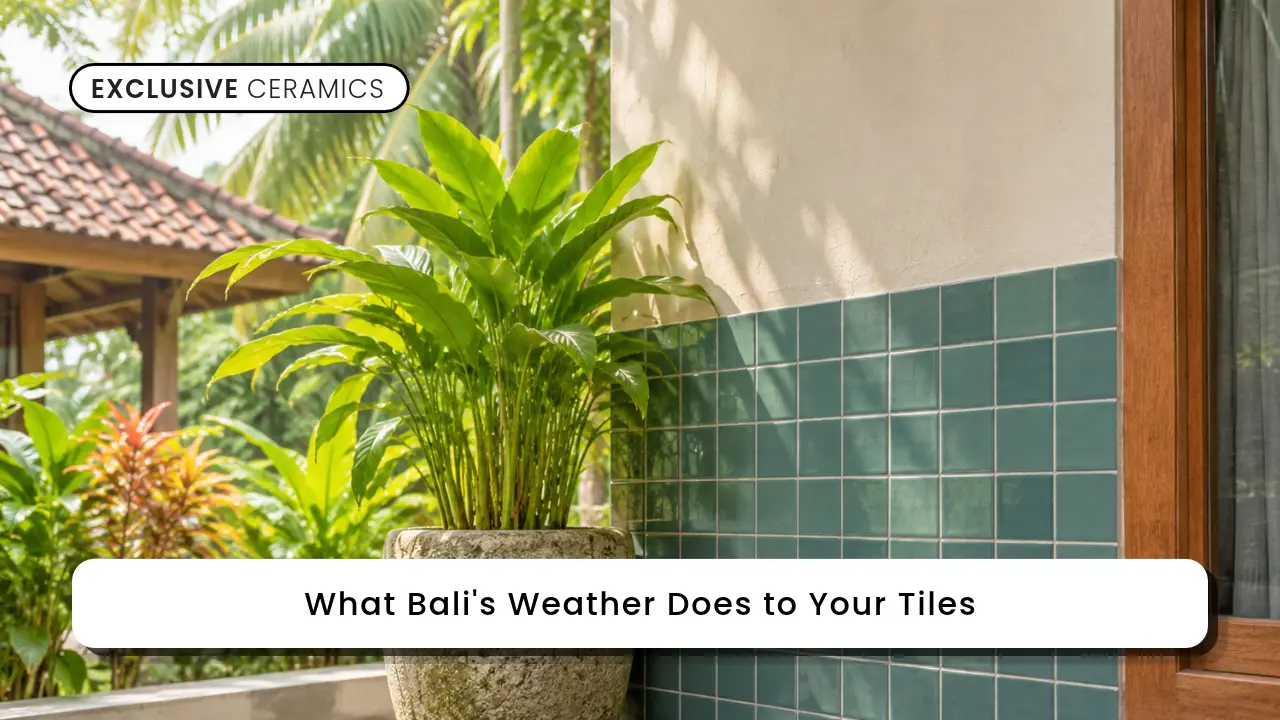
Knowing how 10×10 ceramic tiles in Bali climate react helps you avoid costly repairs. Here are the five biggest effects you will notice.
1. High Humidity Keeps Surfaces Damp
Humidity in Bali often stays above 70 percent. The glazed surface barely absorbs moisture from the air. However, the cement bed and grout below absorb it slowly. Damp layers weaken the bond over time. Tiles can then sound hollow or lift at the edges. Tap a tile with a coin to check for that hollow sound.
2. Heavy Rain Pushes Water Into Grout Lines
The wet season brings hard rain from roughly November to March. Small tiles mean more grout lines, and water finds every gap. Weak grout lets moisture reach the adhesive. Outdoor 10×10 ceramic tiles in Bali climate need extra care for this reason. Proper slopes and drains also keep standing water away.
3. Strong Sun Heats the Surface
On open terraces, 10×10 ceramic tiles in Bali climate face intense direct sun. Dark tiles can heat past what bare feet can handle. Tiles expand slightly by day and shrink at night. This constant movement stresses the adhesive. Cracks and loose corners often follow. Fading is rarely the issue, since glazed ceramic holds its color well under UV light.
4. Salty Sea Air Leaves Residue and Weakens Grout
Coastal areas like Seminyak, Sanur, and Uluwatu get salt in the air. Salt settles on tiles and seeps into grout. It leaves white, chalky stains and slowly wears the grout down. Glazed tiles resist salt well, but grout does not. Homes within a few kilometers of the sea should plan for this.
5. Constant Moisture Feeds Mold and Algae
Warm, damp spots grow mold fast, especially in shaded corners and showers. Grout lines trap moisture and dirt, so green or black stains appear there first. Mold does not damage the glaze itself. Yet it makes floors look old and slippery.
How to Help 10×10 Ceramic Tiles Last in Bali
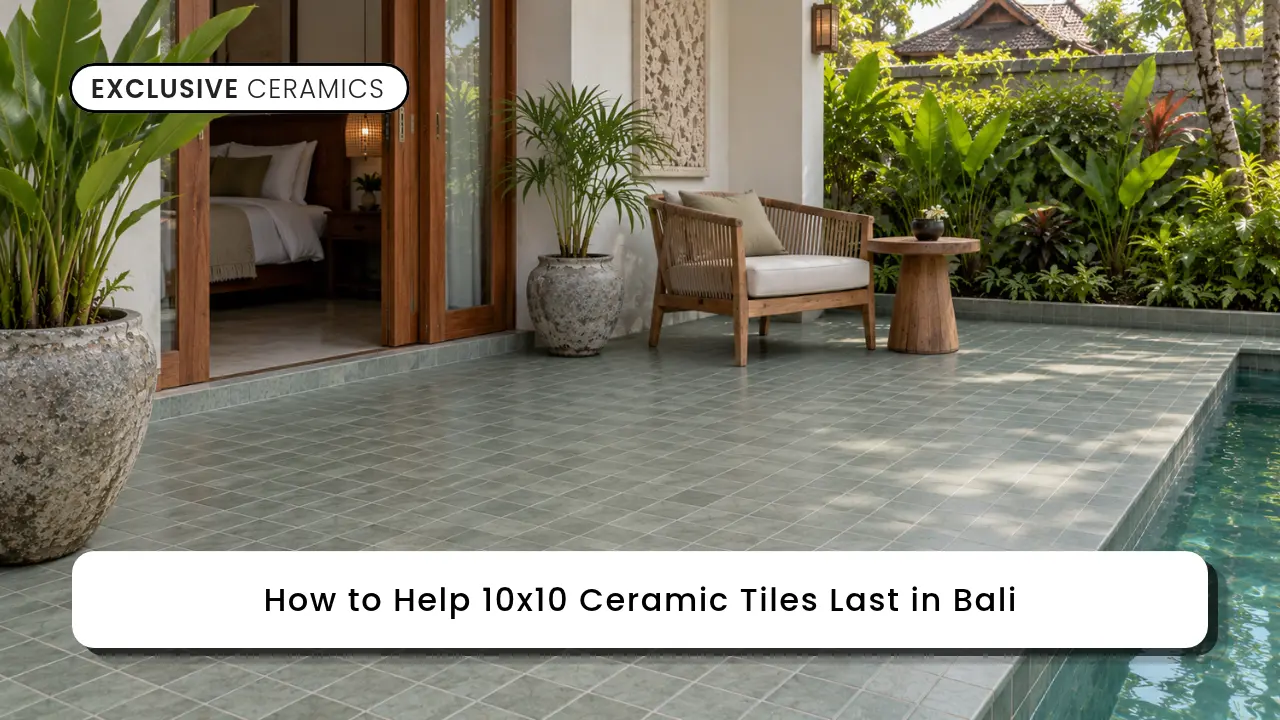
These steps help 10×10 ceramic tiles in Bali climate stay strong for years. Most of them cost little when you plan early.
1. Pick Tiles With Low Water Absorption
Water absorption matters most when buying 10×10 ceramic tiles in Bali climate. Look for the rate on the box or product sheet. A lower number means the tile soaks up less water. Dense tiles handle rain and humidity better. Outdoor areas need the densest tiles you can find.
2. Choose Textured Finishes for Wet Areas
Wet glossy tiles get slippery fast. Pick a matte or textured finish for showers, pool edges, and open terraces. The small size helps too, since extra grout lines add grip underfoot. Rain and bare feet make this a safety choice, not just a style choice.
3. Prepare the Base and Use Quality Adhesive
Even the best 10×10 ceramic tiles in Bali climate fail on a weak base. Waterproof the base before you lay anything. Use a quality tile adhesive, not plain cement mix. Press each tile firmly so no hollow gaps remain. Hollow gaps let water collect and break the bond.
4. Seal Grout or Switch to Epoxy Grout
Grout is the weakest part of any tiled surface. Epoxy grout resists water, salt, and stains better than standard cement grout. Epoxy costs more upfront but saves repair work later. If you use cement grout, seal it after it cures. Reseal every year or two in wet areas.
5. Leave Movement Joints Outdoors
Open terraces need small gaps that absorb heat movement. Ask your installer to add flexible joints every few meters. These gaps prevent cracks when tiles expand. Skipping them often causes loose tiles and broken corners. Shaded, covered areas need fewer joints than sunny ones.
6. Clean Often With Gentle Products
Rinse salt and dust off with fresh water each week near the coast. Use a soft brush and mild cleaner on grout lines. Avoid strong acids, since they eat away grout. Dry shaded areas quickly to slow mold growth. Regular care takes minutes and saves repair costs.
So, if you want to buy 10×10 ceramic tiles for Bali projects can count on, message Exclusive Keramik today. Hurry up and buy them at Exclusive Keramik 10×10 right now through the WhatsApp button below!

Also Read: 10×10 Ceramic Tiles for Bali Rooftop Cafe With Stylish Look
Conclusion
Bali’s humidity, rain, sun, and salty air all test small tiles. Grout lines and the base below take most of the damage, not the glaze. Still, 10×10 ceramic tiles in Bali climate can last for many years with smart choices. Pick low-absorption tiles, install them well, and seal the grout. Clean regularly and your floors and walls will look fresh.